

On October 28, 2023, one of the world’s most important research libraries effectively disappeared from the internet.
The attack was not a temporary outage: it crippled the British Library’s digital infrastructure, shut down its catalogues and online collections, and set in motion a recovery effort that is still underway nearly 3 years later. For those interested in the Greek New Testament, one particularly serious consequence was the loss of access to the Library’s substantial digital collection of Greek NT manuscripts. Hundreds of manuscripts that we had grown accustomed to consulting in high-resolution color suddenly became inaccessible.

This post looks more closely at the Greek NT collection: how much of it had actually been digitized before the attack, what the British Library has since restored, and what the prospects are for the remaining manuscripts.
The fate of these manuscripts also raises broader questions about the relationship between digitization, digital preservation, and continuing access. What happens when access to important cultural heritage depends too heavily on a single institution? The British Library’s Greek New Testament collection offers an unusually clear case study through which to explore those questions.
How Much Had Been Digitized Before the Attack?
Before the cyberattack, the British Library had digitized a remarkably large portion of its Greek New Testament manuscript collection. The Kurzgefasste Liste records 221 witnesses housed there:1
| Category | Manuscripts |
Digitized before attack |
Percent digitized |
|---|---|---|---|
| Papyri | 4 | 3 | 75.0% |
| Majuscules | 21 | 17 | 81.0% |
| Minuscules | 110 | 110 | 100% |
| Lectionaries | 86 | 77 | 89.5% |
| Total | 221 | 207 | 93.7% |
This means that 207 of its 221 Greek NT witnesses (93.7%) had digital images available online. This included all 110 minuscules and the majority of its papyri, majuscules, and lectionaries. Only 14 witnesses appear not to have been digitized by the Library before the attack: P43; 068, 086, 0204, 0239, ℓ143, ℓ316, ℓ317, ℓ1319, ℓ1497, ℓ1582, ℓ1601, ℓ1605, and ℓ1992. 2
The Library had come remarkably close to providing comprehensive digital access to its Greek NT collection before nearly all of it disappeared online.
What Happened?
The British Library has published a very detailed account of the cyberattack and its aftermath. On October 28, 2023, the Rhysida ransomware group attacked the Library, exfiltrating about 600 GB of data and encrypting or destroying substantial parts of its server infrastructure. The British Library did not pay the ransom and refused to negotiate with the hackers; the stolen material was subsequently released on the dark web.
The attack also exposed a problem the Library was already trying to address: much of its technical infrastructure was aging and increasingly difficult to maintain. Plans were already underway before the attack to replace its older platform and upgrade parts of its core systems; its 2023–2030 strategy had acknowledged a “daunting array of technical challenges” and the need for further investment in its digital infrastructure. The attack showed how serious those weaknesses had become. The Library later acknowledged that its complex and outdated systems allowed the attackers to reach more of the network than would likely have been possible with a more modern infrastructure.
But for the present question, perhaps the most important—and most reassuring—finding of the Library’s investigation was that the underlying digital collections had not vanished. It reported that secure copies of its manuscripts and metadata survived. There is therefore no indication that these collections need to be photographed again. The problem has been getting those collections safely back into use.
Restoring access has proved far more complicated than simply copying files onto a new server. As part of the restoration process, each dataset needs to be checked to ensure its integrity. At the same time, much of the infrastructure that was needed to manage and host those collections has had to be rebuilt.
The scale of that task seems to have been considerably greater than was first anticipated. In January 2024, the Library warned that disruption to some services would continue for “several months.”3 By March it had established an 18-month Rebuild & Renew program, combining temporary workarounds with the much larger task of constructing a new, more secure technological infrastructure. Nearly 3 years after the attack, that recovery is still underway.
This may help explain why recovery has taken so long. The Library has not spent the past nearly three years recovering and validating data while rebuilding, replacing, or adapting a large number of interconnected systems, many of which were already outdated before the attack.
There has nevertheless been substantial progress. By November 2025, more than 3,000 digitized manuscripts were again available through the new website, with more being added.
The recovery of Greek New Testament manuscripts, however, has so far been very limited.
Which Manuscripts Are Back Online?
As of August 28, 2026, I could only identify 5 Greek NT witnesses that are available again through the Library’s new IIIF system.
| GA number | British Library shelfmark | Manuscript |
|---|---|---|
| 01 | Add MS 43725 | Codex Sinaiticus |
| 027 | Add MS 17211 | Luke 1–23 |
| P5 | Papyrus 782; Papyrus 2484 | Gospel of John |
| P18 | Papyrus 2053 | Revelation |
| ℓ1603 | Or 6801 | Greek-Coptic lectionary |
GA 01 — Codex Sinaiticus (Add MS 43725)
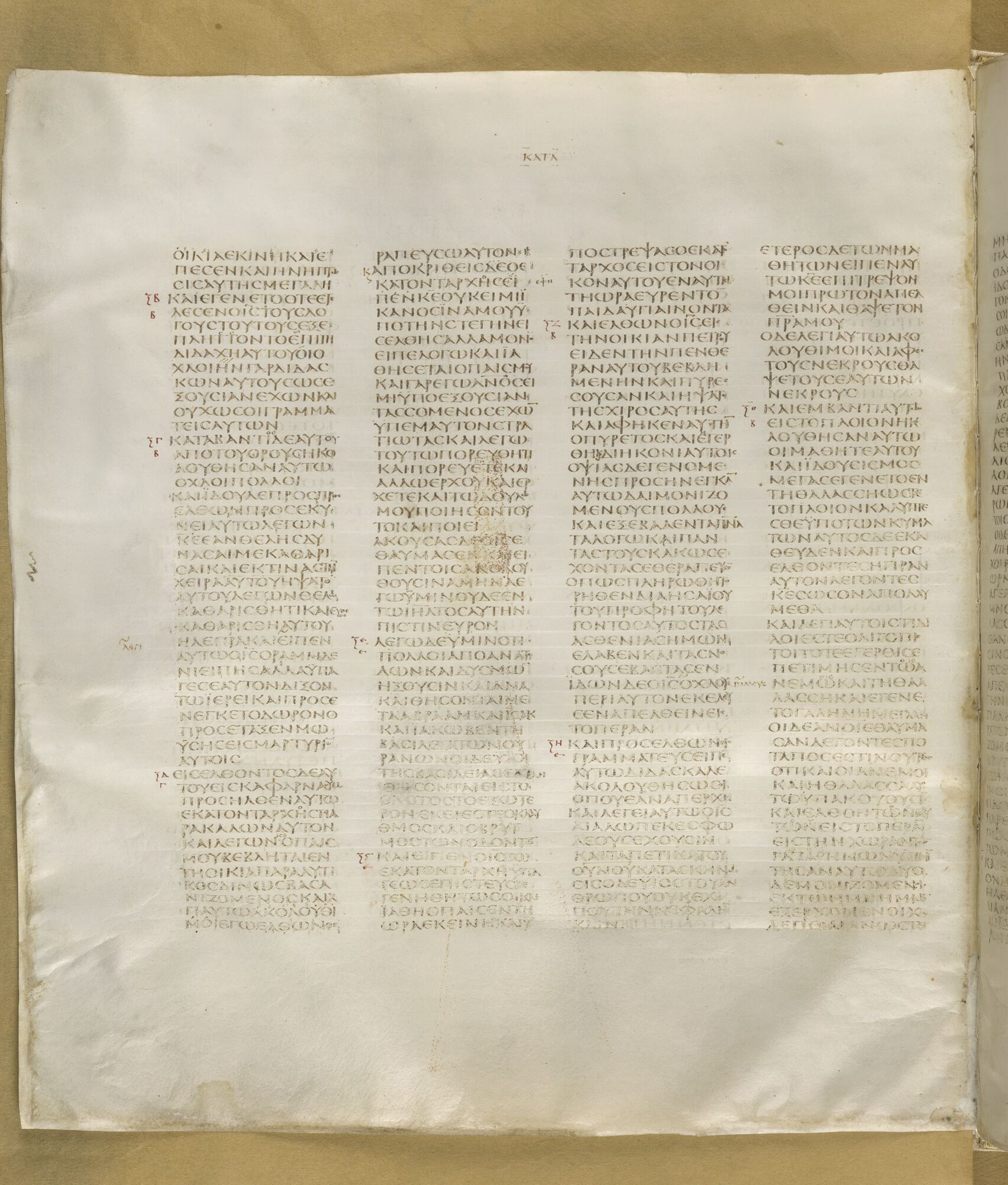
Codex Sinaiticus is a 4th-century parchment codex preserving the complete Greek New Testament together with substantial portions of the Septuagint, the Epistle of Barnabas, and part of the Shepherd of Hermas. The British Library holds the largest surviving portion, while other leaves are preserved in Leipzig, St Petersburg, and St Catherine’s Monastery on Sinai.
As will be discussed below, Sinaiticus is a special case because its surviving portions had already been brought together through the Codex Sinaiticus Project, meaning its digital existence was not tied solely to the British Library’s old site.
GA 027 — Codex Nitriensis (Add MS 17211)

Codex Nitriensis is a 6th-century Greek majuscule preserving portions of Luke 1–23. The Gospel survives as the lower text of a palimpsest later reused for a Syriac text of Severus of Antioch.
P5 — Papyrus 782 and Papyrus 2484

P5 is a 3rd-century papyrus of the Gospel of John preserved under 2 shelfmarks. Papyrus 782 contains portions of John 1 and 20, while Papyrus 2484 contains John 16:14–30.

P18 has Revelation 1:4-7 preserved on one side of a papyrus fragment generally dated to the 3rd century. On the other side is the end of Exodus, written by a different scribe. This unusual combination on the same piece of papyrus has generated debate over whether the fragment comes from an Exodus roll later reused for Revelation or from a codex containing texts copied by different hands.4
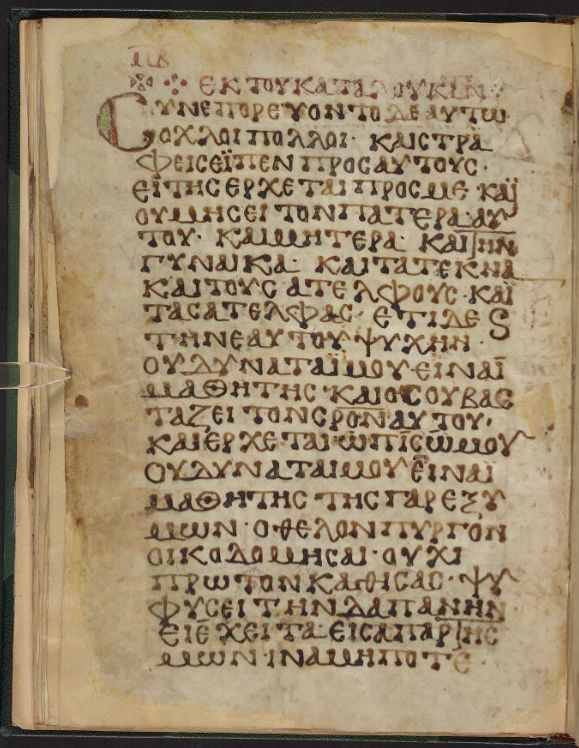
ℓ1603 forms part of a late 10th or early 11th-century Coptic manuscript containing a collection of different texts in honor of St Mercurius. Nine leaves contain a bilingual Greek-Coptic lectionary section with readings from Matthew, Mark, and Luke.
While the restoration of these 5 witnesses is certainly welcome, it also makes the scale of what remains unavailable very clear. More than 200 Greek New Testament manuscripts still remain offline.
What was initially expected to be a disruption measured in months has now stretched into years, with no clear timetable for when the remaining manuscripts will return. For those whose research depends on these images, the uncertainty over when access will return can mean delaying projects or relying instead on older, lower-quality microfilm or facsimiles (where those are available).
One conspicuous example is GA 02, Codex Alexandrinus (Royal MS 1 D VIII), a 5th-century manuscript preserving most of the New Testament and one of the great uncial codices.
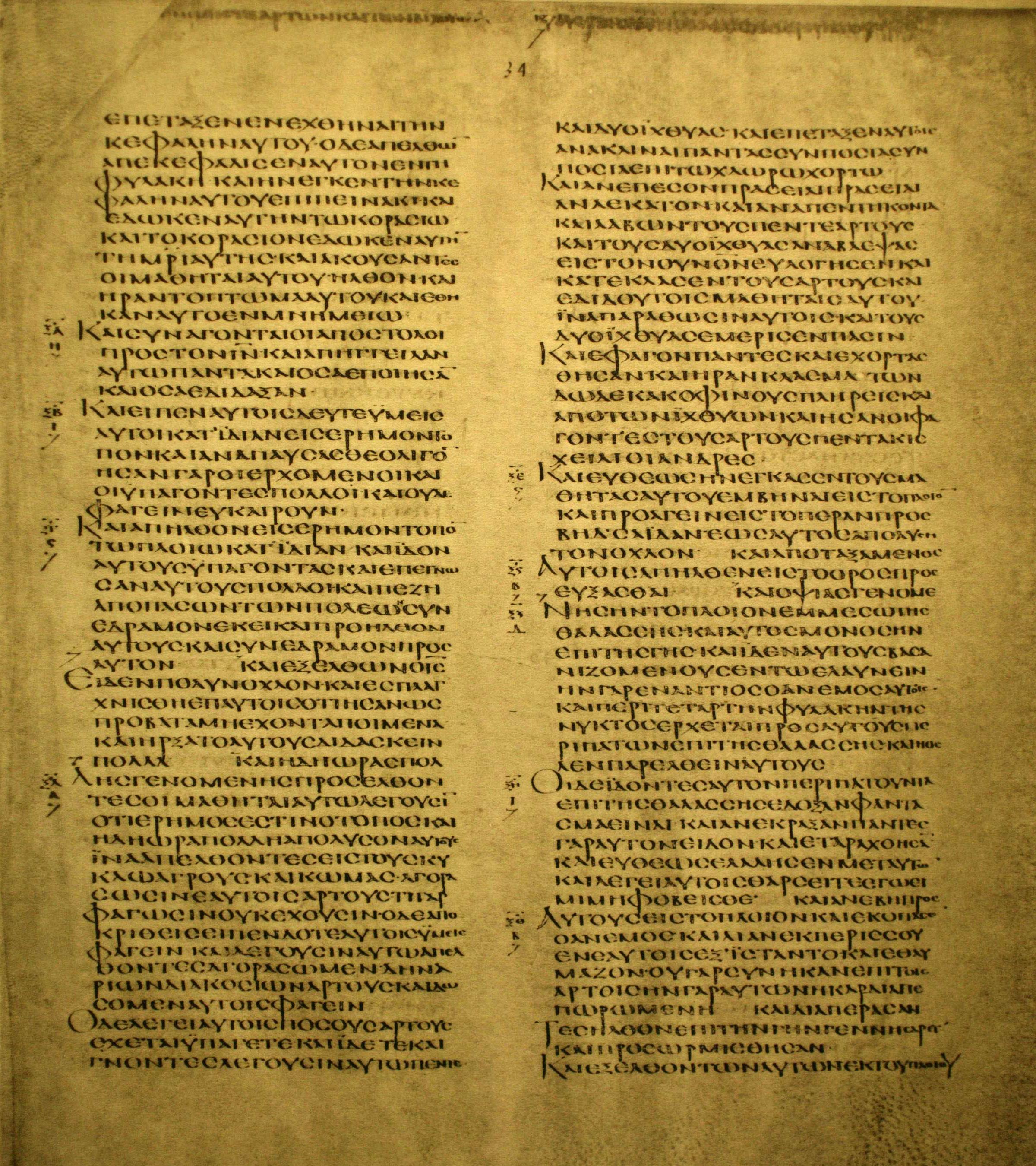
As of today, the catalogue record still states that its digital images are currently unavailable.
What the British Library Cyberattack Can Teach Us
The British Library had already completed the difficult and costly work of photographing these manuscripts, and secure copies of the images appear to have survived the cyberattack. Yet most have remained inaccessible for years. The episode offers a useful case study in the vulnerabilities of digital collections and points to several broader lessons about preservation, access, and resilience.
Preserving the Files Is Not the Same as Preserving Access
The cyberattack is a reminder that the digital realm is not immune from the kinds of loss and disruption we usually associate with physical collections. The survival of the British Library’s digital collections was most certainly an important preservation success. Without secure copies, the consequences of the attack could have been far worse. Yet the prolonged disruption makes clear that the survival of digital objects does not necessarily guarantee continued access to them.
This reality is certainly one that the British Library itself would acknowledge. In fact, it recently described digital preservation as “so much more than just storage,” understanding preservation as a continuing process across the digital lifecycle, from acquisition through to access, intended to keep digital material retrievable and accessible over time. In that sense, the Library succeeded in protecting the underlying digital objects from catastrophic loss. What proved much more fragile was the ability to protect continued access to them.
Brendan O’Connell, a scholar of medieval literature at Trinity College Dublin, made a similar point in 2024 when, reflecting on the effects of the British Library attack on research and teaching, he invoked the familiar maxim that “digitisation is not preservation.”5
Digitization is not enough. Secure preservation copies are essential, but access remains fragile when every route to those files runs through a single institution and its technical infrastructure.
Freely Viewable is Not the Same as Freely Reusable
Before the attack, the British Library’s Greek New Testament manuscript images were freely available to view online, but using those images beyond the Library’s own platform was often considerably more difficult. Scholarly publications commonly reproduced British Library manuscript images only with permission and a British Library copyright credit, while the Library’s general website conditions restricted creating another electronic database or recirculating material unless expressly permitted.6
That decision meant that long-established repositories with substantial collections of Greek NT manuscripts, such as CSNTM and the NTVMR, could not simply upload these digital images themselves; they could only direct users to the British Library’s website for high-resolution color images. So when the Library went offline, there was no equivalent publicly accessible copy of most of those images elsewhere.
Wider Distribution Can Make Access More Resilient
Had these digital images also been deposited with trusted scholarly repositories under terms permitting independent hosting, the ransomware attack would still have been disastrous for the British Library but it would not have removed the high-quality images of these manuscripts from circulation for years. This would not necessarily have required unrestricted reuse: arrangements permitting trusted repositories to preserve and independently display copies could provide much of the same resilience while leaving ownership and other rights with the respective holding institution. This is fundamentally a question of redundancy: having more than one independent copy, in more than one place, so that the failure of one system does not sever access.
It is interesting that the British Library itself has not applied a single model of reuse to everything it has digitized. Some manuscripts and archival material have been released under Public Domain or Creative Commons terms, 7 demonstrating it already has mechanisms for allowing digital material to be reused beyond its own website.
Open reuse is usually discussed in terms of widening access: reusable images can be downloaded, reproduced, used in teaching, incorporated into research, or presented in new digital tools. But the British Library attack makes another benefit unusually clear: open reuse can also make access more resilient, since trusted repositories can retain and independently host copies when one institutional platform disappears.
This principle is already well established in the field of digital cultural heritage. The revised 2025 Europeana Public Domain Charter, for example, argues that cultural heritage institutions should avoid placing unnecessary restrictions on public-domain material and should provide high-quality, reusable reproductions and metadata. Importantly for the present case, it also emphasizes safeguarding the continuing availability of material in the public domain.
The principle behind LOCKSS, a digital preservation initiative, is even more memorable. Its name—“Lots of Copies Keep Stuff Safe”—summarizes an approach built around maintaining multiple independent copies in different locations, reducing the risk that hardware failure, malicious attack, human error, or institutional failure will make important digital material disappear altogether.

Neither Europeana nor LOCKSS was designed specifically with Greek New Testament manuscripts in mind, but the principles they embody—continuing availability and distributed preservation—are directly relevant here. The British Library had sufficient redundancy to prevent the wholesale loss of its digital files. What most of the Greek NT collection lacked was comparable redundancy in access.
The Codex Sinaiticus Project as a Model
The British Library has already participated in a project that elucidates what wider digital access can look like. Codex Sinaiticus is physically divided among 4 institutions: the British Library, Leipzig University Library, St Catherine’s Monastery, and the National Library of Russia. Beginning in 2005, those institutions collaborated to conserve, photograph, transcribe, and digitally reunite its surviving leaves through the Codex Sinaiticus Project.8

The benefit of that collaboration was considerable. A manuscript dispersed across 4 collections could once again be consulted as a whole, with high-resolution images of its surviving leaves brought together in one place and linked to a detailed electronic transcription.
The cyberattack revealed another advantage: access to Sinaiticus did not depend solely on the Library’s own website. When that platform failed, the manuscript remained available through the separate Codex Sinaiticus Project.
The project also shows that institutional ownership and investment in digitization do not necessarily require maintaining exclusive control over digital rights and access. The British Library owns its portion of Sinaiticus and participated in photographing and presenting it, yet it allowed those images to be made available through a shared international project rather than being confined to its own website.
Sinaiticus therefore offers a useful example of both the scholarly value of wider digital access and the greater resilience that comes when an important digital resource does not depend entirely on a single institutional platform.
Access Not Dependent on the British Library Alone
As mentioned above, in the case of Greek New Testament manuscripts, trusted repositories capable of doing this already exist. CSNTM, for example, has spent more than 2 decades photographing, preserving, and providing online access to Greek NT manuscripts. It now holds more than half a million manuscript images and maintains redundant archival copies, including backups in separate international locations.9 The NTVMR likewise provides an established digital platform for images of Greek NT manuscripts.
Had the the British Library allowed their images to be distributed more widely before the attack, other repositories could have provided an alternative source of access when the Library’s own systems went offline. This is not simply a missed opportunity from the past: the same possibility remains open for the more than 200 manuscripts that have yet to return.
The British Library says that secure copies of its digital collections and metadata survived the attack. As the remaining manuscript images are validated and prepared for restoration, the Library could in principle also make them available in ways that permit established repositories to preserve and host copies independently. 10 There would still be practical work involved—transferring the files, matching images and metadata, and agreeing on rights and responsibilities—but these platforms are already equipped to host manuscript images. This could provide another route to the images without requiring access to wait entirely on the rebuilding of the Library’s own infrastructure.
Of course, these arguments do not apply equally to every digitized collection. I am aware that libraries have to deal with loans, donor restrictions, sensitive material, third-party rights, and other legal or ethical constraints. But I believe the British Library’s remaining Greek NT manuscripts present a particularly strong case for more open reuse and distribution: most are held by the Library itself, they are already digitized, and wider distribution could help protect continuity of access.11
A Significant Change on the Rebuilt Platform
There is, however, an important development on the rebuilt platform. All 5 Greek New Testament witnesses that I have been able to identify as having been restored are now presented in the British Library’s new IIIF viewer with their images marked Public Domain. This means they may be used freely. Whatever the reasons for this change, it represents a significantly more open approach to these manuscript images than researchers have often encountered in the past and is a most welcome development.
It also changes, at least for the manuscripts restored so far, one of the circumstances discussed above. Images released as Public Domain no longer need to remain dependent on the British Library’s own platform for their continued availability: other repositories can in principle preserve, reuse, and provide access to copies themselves.
This development certainly moves in the right direction. If the same Public Domain designation is applied to the remaining Greek NT manuscripts as they return online, the rebuilt collection could ultimately be considerably more resilient than the one that disappeared in October 2023.
Conclusion
Nearly 3 years later, more than 200 Greek New Testament manuscripts that could once be consulted through the British Library are still unavailable online, with no reliable timeline for when access will be restored. The digital files themselves seem to have survived; what proved far more fragile was access to them.
The British Library cyberattack has revealed both the value of digitization and the vulnerability of relying on a single institution or platform for continued access. That this could happen to one of the world’s largest and best-resourced research libraries should certainly give us pause about the fragility of digital access and the need for multiple layers of resilience.
The implications are especially serious for material of such cultural, historical, and religious significance as Greek New Testament manuscripts. Preserving the digital files is only part of the task. Long-term preservation also has to take seriously the continued availability of what has been preserved.
The next step, it seems to me, is to think about these two things together: digitization that is accompanied, wherever possible, by sufficiently open reuse and sharing policies that allow manuscript images to remain accessible even when a particular platform or institution fails.
Until then, I remain hopeful that the rest of the British Library’s Greek New Testament manuscripts will not remain offline much longer.
- This number excludes GA 717 and ℓ2143. Although both are currently listed under the British Library in the NTVMR, neither should be counted among the Library’s own holdings at the time of the attack. GA 717 belongs to the Ladies’ College in Cheltenham (Dep. e 175) and is on long-term loan to the British Library, while ℓ2143, the Kingswood manuscript, is likewise on loan to the Library (Loan MS 87). ↩︎
- An exception is P43, which does not appear to have been available through the British Library’s own Digitised Manuscripts site, but has digital images through CSNTM: https://manuscripts.csntm.org/manuscript/View/GA_P43 ↩︎
- British Library, “Making the most of web archives during UK Web Archive downtime,” 21 January 2024, which stated that disruption to some services was expected to persist for “several months”: https://www.bl.uk/stories/blogs/posts/exploring-alternative-access-making-the-most-of-web-archives-during-uk-web-archive-downtime See also British Library, ‘Cyber-attack recovery update,’ which explains that the attack destroyed multiple capabilities simultaneously and required a rebuild of the Library’s technology infrastructure: https://www.bl.uk/about/cyber-attack ↩︎
- British Library, Archives and Manuscripts Catalogue, “Papyrus 2053.” The rebuilt catalogue currently identifies the recto as Exodus 11:26–32, evidently in error; the original edition identifies the passage as Exodus 40:26–32. Arthur S. Hunt interpreted the fragment as part of an Exodus roll whose reverse was subsequently reused for Revelation: A. S. Hunt, The Oxyrhynchus Papyri, Part VIII (London: Egypt Exploration Fund, 1911), 5–6, 13–14. Brent Nongbri argued that it may instead have been a leaf from a codex: “Losing a Curious Christian Scroll but Gaining a Curious Christian Codex: An Oxyrhynchus Papyrus of Exodus and Revelation,” Novum Testamentum 55 (2013): 77–88, https://doi.org/10.1163/156853612X645350. For a subsequent defence of the reused-roll interpretation, see Scott D. Charlesworth, “A Reused Roll or a ‘Curious Christian Codex’? Reconsidering British Library Papyrus 2053 (P.Oxy. 8.1075 + P.Oxy. 8.1079),” Buried History 53 (2017): 35–44, https://doi.org/10.62614/21ppa442. ↩︎
- “The Afterlives of Adam Scriveyn: Chaucer’s Scribe in Dante’s Inferno,” Ecdotica 21 (2024): 231–245, esp. 231–232. DOI: https://doi.org/10.7385/116702 ↩︎
- British Library, “Terms and conditions,” section “Websites and Online Services.” The Library distinguishes material released under Public Domain, Creative Commons, or other applicable terms from other website material; its prohibited-use provisions restrict, among other things, using material obtained from the website to create another electronic database unless expressly permitted or authorized in writing. https://www.bl.uk/terms ↩︎
- The British Library had already applied more permissive reuse terms to some manuscript images before the cyberattack. In December 2016, Dirk Jongkind drew attention to the Library’s decision to release certain digitized manuscript images under Public Domain on the ETC blog in December , and Peter Gurry likewise noted on ETC in June 2023 that the newly digitized Curetonian Syriac Gospels (Add MS 14451) were listed as Public Domain. ↩︎
- Of course, the project should not be understood as a precise model for unrestricted open redistribution. Its electronic version is provided for non-commercial personal and educational use; other uses may require permission from the relevant holding institution: https://www.codexsinaiticus.org/en/copyright.aspx Its relevance here is to show that the British Library participated in a collaborative model in which access to its portion of the MS was not dependent solely on the Library’s own manuscript platform. ↩︎
- CSNTM “Archiving/Post-Production.” CSNTM states that the manuscript owner retains all rights to their images: allowing them to preserve and display them does not require the owning institution to relinquish its rights. CSNTM instead requests the holding institution’s permission to display the images online and to retain an archival copy for preservation. See https://www.csntm.org/archiving-and-post-production/ and https://new.csntm.org/collaboration/. CSNTM’s Digital Manuscript Collection currently contains about 500,000 images: ↩︎
- British Library, “Learning Lessons from the Cyber-Attack: British Library Cyber Incident Review,” 8 March 2024. The review states that secure copies of the Library’s digitized content and metadata survived, but that “each dataset will need to be validated to ensure its integrity before being restored” on the new infrastructure. The public report does not indicate whether the still-offline Greek New Testament image sets have all completed that validation process. https://www.bl.uk/files/v5dwkion/production/99206a2d1e9f07b35712b78f7d75fbb09560c08d.pdf/british-library-cyber-incident-review-8-march-2024.pdf?dl= ↩︎
- A related question concerns whether straightforward digital photographs of public-domain manuscripts necessarily attract a new copyright at all. Peter M. Head, “Copyright of Digital Images of Biblical Manuscripts,” Evangelical Textual Criticism, 16 January 2026, draws attention to a recent UK Court of Appeal decision which, as he summarizes it, suggests that simply photographing an object may not involve sufficient creativity for copyright to arise. The case did not concern biblical manuscripts, so its implications here remain uncertain, but the question could have important future implications for the digitization, reuse, and distribution of images of Greek New Testament manuscripts. https://evangelicaltextualcriticism.blogspot.com/2026/01/copyright-of-digital-images-of-biblical.html ↩︎
Dear Katie, thank you for making me aware of the ongoing severe consequences of the cyberattack on the Britisch library and for illustrating the need of broadening digital accessability as well as of initiative like LOCKSS!
Thank you!
This blog post brings tidings of great joy!