

Eberhard Nestle, born in Stuttgart in 1851, is renowned as the creator of the Novum Testamentum Graece (NTG), first published in 1898, and known today as the Nestle-Aland edition. Nestle’s aim was to produce an affordable Greek New Testament with high print quality that reflected the best results of modern scholarship. This new edition would replace the widely circulated Textus Receptus that was commonly used in churches, schools, and universities at the time.
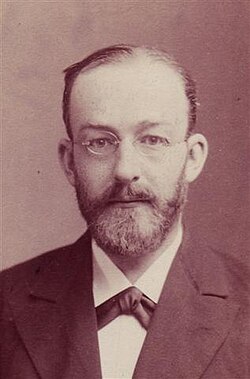
Today, Nestle’s edition is widely recognized as the longest-running and most influential critical edition of the Greek New Testament, a text that has profoundly shaped New Testament scholarship, countless translations, and the way millions of readers encounter the New Testament.
What has remained little known until now, however, is the fuller origin story behind this edition: Nestle’s initial vision for the project differed fundamentally from the text ultimately published in 1898 by the Württemberg Bible Society (later known as the German Bible Society).
Insights from Nestle’s Proposal
One of the most interesting findings of my research on the history of the Nestle-Aland was through investigating Nestle’s original proposal to the Württemberg Bible Society. It suggests that the history of this edition, like many origin stories, is more complex and nuanced than has previously been known.1
Nestle’s proposal, dated November 4, 1895, was entitled Ob die Stuttgarter Bibelanstalt nicht eine griechische und griechisch-deutsche Ausgabe des Neuen Testaments unternehmen könnte und sollte [Could not and Should not the Stuttgart Bible Society undertake a Greek and Greek-German edition of the New Testament]. This document offers a window into the very different edition that Nestle initially imagined.
Nestle’s proposal is surprising on several levels. Although he was convinced that a new edition was needed, this document reveals that he did not initially envision producing a whole new critical text.
After rejecting both the Textus Receptus and a simple reprint of either Tischendorf’s or Westcott-Hort’s text, Nestle argued that “a new recension of the text therefore seems necessary.” He explained that such an edition would largely correspond to the texts of Tischendorf and Westcott-Hort while incorporating additional improvements. Yet Nestle immediately identified a problem. A newly reconstructed text, he argued, could only succeed if it came from “an authority who had devoted his entire life to the study of New Testament textual criticism and had reached firm conclusions regarding the principles to be followed, the manuscripts to be preferred, and the readings accordingly to be selected.”
Nestle’s next statement is striking: “Yet it is precisely such authorities that are lacking at present.” The field, in his view, was still in flux. Manuscripts such as Sinaiticus and Vaticanus, which had been regarded as the most important witnesses, were being reassessed, while others previously neglected were receiving renewed attention. Under such circumstances, Nestle did not believe that the scholarly consensus necessary to produce a brand new critical text had yet emerged. Nor, crucially, did he present himself as the authority who would be capable of making such a text. As he put it, “One cannot wait until such an authority appears and reconstructs the text anew.”
This restrained understanding of his own authority also shaped the way the edition was presented when it finally appeared. Nestle did not refer to the work as his own independent scholarly revision of the text; indeed, his name did not appear on the title page until the third edition.2
The irony is clear in retrospect. The edition that Nestle envisioned as a practical alternative to waiting for a future authority, and as a compilation of the work of earlier scholars rather than an independent contribution of his own, would eventually make Nestle’s name synonymous with the most widely used critical edition of the Greek New Testament.
An Ode to Bengel
The proposal reveals another little-known fact: the basis of the edition Nestle initially planned was not the text of Tischendorf or Westcott-Hort, but that of Johann Albrecht Bengel (1687–1752), one of the most revered text critics of the eighteenth century and a figure from Nestle’s own Württemberg homeland. Nestle wrote:

“In our country, J.A. Bengel devoted his entire life to New Testament textual criticism; experts still today regard him as the greatest and most distinguished textual critic. His Greek New Testament, first published in quarto and octavo editions in 1734, has been reprinted more than once and has every claim to be presented anew. If the English continue to print the poor text of Erasmus in hundreds of thousands of copies, why should Bengel’s good text not likewise be printed again in Bengel’s homeland?”
This admiration for Bengel had concrete consequences for the methodology Nestle proposed. His starting point was the conviction that comparing more recent editors would show “how closely Bengel had already come to what is regarded in our day as the correct text.” The edition would therefore take Bengel’s Greek New Testament text as its foundation, and the apparatus would record any places where Tischendorf and Westcott-Hort differed from him.
In this way, Nestle imagined an edition that would both revive Bengel and test his text against the leading critical editions of the nineteenth century. At the same time, he allowed for a further refinement of this plan. Where Tischendorf and Westcott-Hort agreed against Bengel, their reading could be placed in the text and Bengel’s moved to the apparatus. More generally, where two of the three authorities agreed, the reading supported by the majority could stand in the text, with the dissenting reading recorded below.
Nestle’s original plan can therefore be understood as an attempt to bridge two eras of textual criticism. Bengel represented a trusted foundation from the eighteenth century. Tischendorf and Westcott-Hort embodied the advances of nineteenth-century scholarship. The goal was not to replace one with the other, but to bring them together in a single edition, reviving the already authoritative work of Bengel and supplementing it with the results of later scholarship. Although Nestle’s proposal already contains the seeds of the comparative method that would come to characterize the NTG, its point of departure was much more conservative.

Nestle was not only a great admirer of Bengel professionally but also personally. In 1893, he published a short book, Bengel als Gelehrter: Ein Bild für unsere Tage [Bengel as a Scholar: An Example for Us Today], which paid homage to Bengel. About him Nestle said, “In his case, the scholar did not disappear into the Christian, nor the Christian into the scholar; rather, each was fostered by the other.”3
Nestle admired both Bengel’s Christian character and his text-critical work. He regarded Bengel’s Greek text as remarkably accurate even by modern standards, and praised not only the wisdom of Bengel’s text-critical principles but also the clarity with which he expressed them.4
Nestle seemed to almost absolve Bengel of responsibility for any shortcomings in his edition. “Where Bengel erred,” he wrote, “his authorities are for the most part to blame.”5 In his estimation, then, Bengel’s occasional lapses were not personal failures of judgment but the inevitable result of the imperfect sources available to him.
Nestle closed his monograph with a tribute to Bengel as the ideal Christian scholar. In his view, what made Bengel great was “the combination of deeply Christian piety and the freest pursuit of truth”—a combination he regarded as exceedingly rare.6
Nestle also appealed to Charles Spurgeon, the famous evangelist, who had praised Bengel for sharing Luther’s conviction that theology is “grammar exercised upon the words of the Holy Spirit.” For Nestle, this captured something essential about Bengel: his theology was rooted in careful attention to the wording of Scripture. Nestle summarizes this ideal with the maxim nemo theologus, nisi philologus (“no one is a theologian unless he is a philologist”).7 It is therefore not surprising that Nestle turned to Bengel as a trusted paragon of scholarship, piety, and textual judgment whose work could still serve as a sound foundation for a modern edition of the Greek New Testament.
The Committee’s Rejection
My archival work not only casts light on the edition that Nestle originally conceived, but also reveals why that vision was not adopted and how it was reshaped into the edition that appeared in 1898.
Nestle’s edition, centered on Bengel, was not the text the Württemberg Bible Society wanted to publish. Two months after his original proposal, the Bible Society committee minutes reveal that they declined to accept Bengel as the base text. Bengel may have been revered in Württemberg, where Nestle was from, but the committee regarded him as too regionally significant and insufficiently international to appeal to a broad scholarly audience.
This decision is historically significant because it shows that Nestle was not the sole architect of the NTG as it eventually appeared. The publisher had both the authority and the willingness to reshape fundamental aspects of the project before it could proceed.
The importance of this decision becomes even clearer in the records from the first half of 1896. The committee did not merely reject Bengel; it scrutinized virtually every aspect of Nestle’s follow-up proposal. One possibility that was considered was the simple reproduction of Tischendorf’s text, but this was rejected because it would offer readers nothing essentially different from what was already available. Another proposal involved combining Tischendorf, Westcott-Hort, Bengel, and Tregelles, but the committee concluded that disagreements among four editions would make the resulting text difficult to manage. Nestle also proposed retaining Erasmus because Luther had used Erasmus’s text, but this suggestion failed to persuade the committee.
Overall, Nestle’s original proposal was deeply shaped by his own regional and historical context in Württemberg, by German Protestantism through Luther, and by the older printed tradition through Erasmus. In some ways, the edition that he initially imagined would have functioned as a revival of Bengel within the world of modern textual criticism.
Before any final decision could be made by the Bible Society, Nestle was required to produce a specimen of Philemon so that the committee could evaluate the proposed format. Only after Bengel and Erasmus had been dropped from consideration and Weymouth was substituted did the proposal move forward.
A Silent Editorial Committee
The implications extend far beyond the rejection of Bengel. The archival record reveals the existence of what may properly be called a “silent editorial committee.” Although Nestle appeared as the sole editor of the NTG, the Württemberg Bible Society exercised substantial influence over the project throughout its formative years.
The committee’s influence extended into the details of the edition itself. They decided that Westcott and Hort’s marginal notes would not be reproduced; determined how verse numbering would function in the Greek and German editions; discussed chapter headings, parallels, and references; decided where explanations of symbols should appear; reviewed proof sheets; removed chapter headings to save space and reduce costs; rejected Nestle’s desire to include Luther’s prefaces; and omitted parallels to the Apocrypha so that the edition would be acceptable in regions where the Apocrypha was not widely used.
These were not minor production details, but affected the edition’s textual basis, apparatus, layout, paratexts, cost, acceptability, and the way readers would navigate the text. The committee was therefore doing far more than supervising publication; it was shaping the form, content, and function of the NTG itself.
Conclusion
Taken together, the proposal and the committee minutes fundamentally alter the traditional understanding of the origin of the NTG. The edition later identified so closely with Nestle’s name was therefore neither the work nor the vision of Nestle alone, but also of an active editorial body of the Württemberg Bible Society, whose members and profound influence have largely disappeared from published histories of the edition. What began as Nestle’s locally and historically rooted proposal—centered on giving Bengel a prominent place—was reshaped through sustained collaboration and compromise into a more international, practical, and commercially viable critical edition that would shape the field of New Testament textual criticism for generations to come.
In the end, Nestle did not get the edition he first imagined. Bengel was removed from consideration as the base text, but he did not disappear from the story. Nestle’s admiration for him endured: beginning with the third edition of the NTG in 1901, a quotation from Bengel stood at the head of the introduction, becoming the first words the reader encounters after the title page.
Te totum applica ad textum: rem totam applica ad te.
Apply yourself wholly to the text; apply the whole text to yourself.

- Excerpts of Nestle’s proposal have already been published in the 100 year anniversary edition of the NTG (27th ed., 1998 printing). The handwritten proposal is held by the German Bible Society. ↩︎
- Eberhard Nestle, “Begleitwort zu den von D. Eb. Nestle für die Privileg. Württ. Bibelanstalt in Stuttgart bearbeiteten Ausgaben des grieschischen, lateinischen und deutschen Neuen Testaments” (1912), 1–2. ↩︎
- Eberhard Nestle, Bengel als Gelehrter: ein Bild für unsere Tage. Mit neuen Mitteilungen aus seinem handschriftlichen Nachlass (Tübingen: Heckenhauer, 1893), 8. ↩︎
- Ibid., 54, 56–57, 69, passim. ↩︎
- Ibid., 75. ↩︎
- Ibid., 85-86. ↩︎
- Ibid. ↩︎
Dear Greg,
how fascinating to see how Nestle’s and the Württembergische Bibelgesellschaft’s were interwoven at this founding time of the new edition! Thanks for unravelling all those details for a better understanding!
Greg, thank you for this historical perspective and insights.