

The name Nestle is inseparable from the history of the Nestle-Aland Novum Testamentum Graece (NTG). Yet the longest-serving Nestle editor was not the edition’s founder, Eberhard Nestle, who edited the NTG from its first appearance in 1898 until his death in 1913.1 It was his son Erwin who took responsibility for the edition in 1914 and remained editor through 1963—nearly half a century. Erwin’s editorship spanned two world wars, the discovery of major new papyri, a substantial expansion of the known manuscript evidence, and important developments in New Testament textual criticism. Despite the length and significance of his tenure, however, Erwin remains one of the lesser-known figures in the history of the NTG.
Erwin inherited an edition that was already remarkably successful. By the time he assumed responsibility for it at the age of 31, the NTG had reached its tenth edition. Its influence had also spread well beyond Germany. In 1904 the British and Foreign Bible Society adopted the NTG text for its own Greek New Testament, replacing the Textus Receptus it had long circulated and giving the NTG a much wider international reach.2 Erwin was therefore not in charge of an edition with only local relevance, but one that was already widely used and well on its way to becoming a standard text.
For Erwin, this was not simply another academic project. It was his father’s legacy, the edition with which the name Nestle had become inseparably associated. Erwin later recalled that he had been acquainted with his father’s work “since my youth.”3 Throughout his life, he devoted considerable effort to preserving both his father’s scholarship and his memory. He therefore had strong reasons to approach the edition he inherited conservatively: to preserve the confidence it had won among readers, maintain the qualities that had made it successful, and safeguard a work so closely bound up with his family.
The success of the edition, however, created an irony. His father Eberhard had worked tirelessly to move beyond the Textus Receptus, replacing it with a critical text. Yet the NTG was now beginning to acquire something of the same status: a printed text accepted increasingly because it was familiar, widely available, and already regarded as standard. By 1909 one assessment could predict that the Nestle edition “seems likely to become the Received Text of the twentieth century.”4 This striking prediction was made before Erwin had even assumed responsibility of it. By the time he did, the possibility that the NTG might itself become the next standard text was already apparent. As its position became more secure, substantial changes to it would also become more consequential. In this sense, the NTG was becoming what might be called a “legacy edition:” an edition whose authority rested not only on the evidence for its individual readings, but also on the scholarship, reputation, and history of use it had inherited.
At the same time, the field Erwin entered as editor was changing rapidly. New manuscripts were being discovered, Gregory’s system was standardizing the way they were identified, von Soden had introduced new ways of classifying manuscripts into textual groups, and by the early 1920s scholars were pressing for changes to the NTG apparatus.5 The NTG was highly successful and closely bound to his father’s name, but that could not remain unchanged as new evidence appeared and new theories of the text developed.
Erwin would spend nearly half a century navigating this tension: preserving his father’s legacy and the confidence scholars had already placed in the NTG, while responding to changes in the field, its theories, and the manuscript evidence itself. The question was not simply how much of the edition should change, but how to preserve what readers valued in it without allowing its growing authority to turn a critical text into a fixed one. Keeping the NTG current required repeated revision as new manuscripts, new scholarship, and new ways of evaluating the evidence became available. The decisions Erwin made in that process would shape the later history of the NTG. If the edition was to remain what Eberhard had intended it to be, it could not simply be frozen in time.
A Son in His Father’s Scholarly World
Erwin Nestle (1883–1972) was born in Münsingen, in what is now Baden-Württemberg. He studied theology at Tübingen and completed his doctorate in philosophy in 1911 with a dissertation on Judaea in the writings of Josephus. Most of his professional life, however, was spent as a secondary-school teacher in Ulm. Only in 1963, at the end of his editorial career, did the state of Baden-Württemberg award him the title of Professor.6 For most of his forty-nine years as editor, then, the NTG was being edited not at a major university or institute for textual research, but largely from the desk of a schoolteacher.
Erwin grew up closely acquainted with his father’s scholarly work, and the surviving family papers offer an unusually vivid glimpse of that environment. His younger half-sister Klara left a brief memoir entitled “Zur biblischen Textkritik. Erinnerungen an Tischgespräche im Hause von Eberhard Nestle” (“On Biblical Textual Criticism: Memories of Table Conversations in the Home of Eberhard Nestle”).7 The title made apparent that textual criticism was discussed at the Nestle family table. Eberhard also involved his son directly in his scholarly projects, including his Greek-Hebrew edition of Jeremiah. After Eberhard’s death, the Württembergische Bibelanstalt (WBA, the predecessor of the German Bible Society, Stuttgart) asked Erwin to continue the project, which was eventually published in 1924.8
World War I interrupted the beginning of Erwin’s editorial career. He served with the Württemberg 26th Infantry Division and was called in military correspondence a “Feldbücherwart,” with responsibility for a field library. In a letter to Paul Schmiedel dated August 13, 1917, Erwin described having spent several periods substituting for field chaplains, interspersed with work in soldiers’ libraries and soldiers’ homes. At the time of writing, his unit was enjoying a period of rest near a large French city, though, as he put it, the fighting on the Flanders front could still be heard in the distance. It is an unusual glimpse of the new editor of the NTG: he had only recently taken responsibility for the edition when military service drew him into field-library work and temporary chaplain duties.

The war years also coincided with an unusually long break in the publication of the edition. The NTG10 appeared in 1914, but the NTG11 did not follow until 1920. Under Eberhard, new editions had normally appeared every one or two years, making the six-year interval the longest gap the edition had yet experienced. While the surviving evidence does not tell us how much work Erwin was able to continue on the NTG while in military service, the gap does show how different the circumstances of his first years as editor were from those in which his father had worked.
The Edition Erwin Inherited
A few features of Eberhard’s edition should be recalled here. Most importantly, its Greek text was not based on collations of manuscripts, but on the agreement of modern critical editions. Eberhard generally followed the majority agreement of Tischendorf, Westcott-Hort, and Weymouth, with Weiss replacing Weymouth from NTG3 onward. The result was a compact and inexpensive Greek New Testament that put the results of modern textual criticism into the hands of students and pastors without requiring them to work through the large critical editions on which it depended.
The apparatus, however, was increasingly being expanded. From NTG3 onward, Eberhard added attestations of Greek manuscripts as well as Latin, Syriac, Sahidic, Gothic, and other ancient witnesses. Eberhard’s NTG therefore contained two apparatuses beneath the Greek text: one recorded differences among the modern editions on which the text was based, while the other supplied textual variants and attestations of primary sources.

Readers accustomed to later editions of the Nestle-Aland will notice another important difference. The edition did not yet have the system of critical signs introduced with NTG13, which linked words in the text directly to their corresponding variants in the apparatus. That innovation would come as part of Erwin’s later revision. His father’s edition contained a growing amount of textual evidence, but the apparatus was not yet equipped to present it as clearly or efficiently as later editions would.
The very form that had helped make the NTG successful also imposed limits on its development. It was a compact and inexpensive hand edition rather than a large critical edition, and the pagination of the Greek text and apparatus remained remarkably stable through the first twenty-five editions. New material therefore had to be compressed into essentially the same amount of space on the page. Eberhard complained in the NTG3 that spatii angustia (“lack of space”) prevented him from supplying more variant readings and witnesses.9 To keep production costs down, the publisher also continued to use the same printing plates far into the edition’s history.10
The basic character of the edition passed on to Erwin was already firmly established. Its Greek text distilled the judgments of leading nineteenth- and early twentieth-century editors, while its apparatus had begun to place manuscript and versional evidence alongside variant readings. At the same time, its compact format placed real limits on how much evidence could be included and how clearly it could be organized.
A Changing Field
One of the clearest signs of change was the increasing standardization of the manuscript evidence itself. After Gregory, von Dobschütz continued the work of maintaining the list of Greek New Testament manuscripts. The Neutestamentler-Tagungen were meetings of German-speaking New Testament scholars who gathered to discuss current research and coordinate scholarly work. The need for a common system was discussed explicitly at the 1923 meeting in Münster, where Paul Schmiedel objected to Herman Hoskier’s plan to use a separate numbering system for Revelation. Instead, he urged scholars to follow Gregory’s system and report newly discovered witnesses to von Dobschütz.11 The proposal was accepted. The manuscript tradition was growing, but scholars were also becoming more systematic in the way that evidence was identified and cited.
Ideas about the transmission of the Greek New Testament tradition and manuscript relationships were changing as well. Von Soden’s massive edition, Die Schriften des neuen Testaments (1902–1913), had attempted to classify the manuscript tradition into large textual groups and recensions. Similar questions occupied the Neutestamentler-Tagungen of the early 1920s. At Würzburg in 1922, scholars proposed that manuscripts and ancient versions should take a more prominent place in the NTG apparatus and that textual groups could be represented by sigla in order to save space. At Münster the following year, they again argued that citing modern editions before each variant was cumbersome and that textual families could be represented more economically. Lietzmann soon called the redesign of the Nestle for academic use an “unabweisbares Bedürfnis” (“unavoidable necessity”).12 These proposals reflected considerable confidence that manuscripts could be organized into recognizable textual groups, an assumption that would itself become less secure as earlier evidence came to light.
The printed landscape was also becoming more crowded. Alongside Tischendorf, Westcott-Hort, and Weiss now stood the major edition of von Soden, as well as the pocket editions of Souter (1910) and Vogels (1920). For Erwin, however, these were not competing enterprises, but additional sources for manuscript readings, patristic citations, and other evidence that could be incorporated into the NTG.
Erwin’s own method of gathering evidence still depended largely on the older world of printed scholarship. Rather than systematically checking manuscripts or photographs for himself, he worked primarily through critical editions. Kurt Aland would later express astonishment at how much Erwin had accomplished using this method.13 By the early 1920s, then, the question was no longer whether the NTG would need revision, but how an established edition could be revised without losing the continuity that had helped make it useful.
Toward a Revision
The idea of such a revision did not begin with Erwin. His father wrote in 1902 that the “völlige Umgestaltung meines Apparats” (“complete redesign of my apparatus”) would have to wait until von Soden’s long-promised edition appeared and its results could be assessed.14 Eberhard added that he and the WBA intended, as long as he had the strength to continue, to do everything possible to make the already well-received edition as useful as possible. Von Soden’s work appeared in stages between 1902 and 1913, with the text and apparatus appearing in 1913, the year of Eberhard’s death. Eberhard did not live to carry out the redesign he had anticipated.
By the early 1920s, the question of revising the NTG had become much more concrete for Erwin. A WBA report from October 1924 refers specifically to “Erwin’s ideas” for reworking the apparatus. Von Dobschütz and other experts reviewed his proposals, and von Dobschütz wanted them brought before the Neutestamentler-Tagung for further discussion.
Erwin attended the meeting at Magdeburg in October 1924 and presented sample pages that he had prepared on the basis of the earlier discussions. The scholars considered whether critical signs should appear in the Greek text, whether the two existing apparatuses should be combined, how textual groups should be represented, and how much manuscript evidence could realistically be fitted into a small hand edition. Erwin played an active role in the discussions, as he did not accept every proposal. He resisted, for example, using group sigla as a substitute for citing Codex D, the Latin evidence, and the Syriac evidence individually.15 Scholars could propose changes, but Erwin still had to work out how they could actually be incorporated on the printed page.
Erwin’s new assignment for the NTG was formally defined in a contract with the WBA on December 16, 1924. He was tasked with reworking the apparatuses at the bottom of the page, introducing reference signs into the text, and revising the marginal references.
A Modern Textus Receptus?
By the middle of the 1920s, the comparison with the Textus Receptus was no longer merely a prediction. At the 1925 Neutestamentler-Tagung in Erlangen, German scholars described the NTG as “eine Art modernen Textus receptus” (“a kind of modern Textus Receptus”).16 The phrase was not meant critically; it reflected the practical value of using a familiar printed text as the basis for manuscript collations.
The NTG had become a common point of reference for New Testament textual research and was acquiring the status of a legacy edition. Its stable text provided a basis for collation, citation, teaching, translation, and concordances. Drawing on the work of respected scholars, carrying the Nestle name, and backed by years of use, the edition had earned the confidence of readers. Its authority rested not only on the evidence for individual readings, but also on its inherited reputation and widespread acceptance. This gave scholars, translators, teachers, and publishers practical reasons to preserve its stability. In this sense, the NTG was becoming a modern Textus Receptus: a familiar, authoritative text whose standing extended beyond the evidence for any single reading.
But that stability also carried the risk of inertia. The question could easily have shifted from “What reading does the evidence support?” to “Is there enough reason to disturb the text everyone already uses?”
Something similar had happened with the Textus Receptus. Its long use as the standard printed Greek New Testament made it extremely useful as a common point of reference, but that very usefulness also encouraged stability. Readings could remain in place not only because scholars continued to judge them as best supported, but because they belonged to the text everyone already knew and trusted. The comparison with a modern Textus Receptus therefore captures a real tension in the success of the NTG. The more widely it was accepted, the greater the risk that a critical text would begin to be treated as fixed.
Erwin inherited this tension along with the edition itself. He was not simply choosing among variant readings in the abstract, but revising an edition that already had a history, a reputation, and a growing authority of its own. Changes therefore had to be weighed not only against the manuscript evidence, but also against the continuity and stability that had helped make the NTG so useful. Thus, his task was to keep the edition open to change while preserving the continuity readers had come to value—to retain the advantages of a common text without allowing its familiarity to become an argument against further critical work.
Erwin’s Revision
Even as the NTG was acquiring the status of a standard text, Erwin was undertaking its most substantial revision to date. He had presented sample pages for a new apparatus in 1924, and the terms of the revision had been formally defined by the WBA later that year. The resulting edition appeared in 1927 as the NTG13.
The most visible change was the apparatus. The two apparatuses (one of editions and one of manuscript variants) were combined into one, and manuscript and versional attestations were offered much more consistently. Erwin sought to supply an apparatus entry everywhere Tischendorf, Westcott-Hort, or Weiss recorded a significant variant. The newly introduced critical signs also saved space by reducing the need to repeat the wording of the text in the apparatus (i.e., the lemma).

The Greek text remained relatively fixed, but the revised apparatus gave readers much greater access to the evidence for and against its readings. In this way, Erwin preserved the familiar text while making it easier for readers to evaluate its textual basis for themselves. This was also how he understood the purpose of the expanded apparatus. As he explained, the ancient witnesses were included to offer readers an insight into the history of the text and sufficient material to form their own judgements. He also invited suggestions and corrections from readers. The apparatus, then, was not simply intended to defend the printed text, but to provide readers with the evidence needed to evaluate it independently.
Previous NTG editions did not follow the majority-agreement rule strictly for establishing the text, so Erwin carried this out systematically in the NTG13. Kurt and Barbara Aland later remarked that with NTG13 Erwin “finally made it conform in fact to the majority principle.”17 His revision therefore applied more consistently the method his father had already established.
He also regularized the orthography according to what contemporary philological research regarded as first-century usage, rather than allowing the majority agreement of the printed editions to determine individual spellings. Many differences of punctuation disappeared from the apparatus, as did the remaining references to Weymouth’s edition. Erwin’s own annotated copy of NTG3 shows the revision taking shape at a still more detailed level. It contains numerous proposed alterations, some of which appeared in NTG13. At Luke 15:29, for example, a handwritten note concerning ἔριφον eventually became a new apparatus entry, showing Erwin’s work actively updating the edition.

Erwin also introduced group symbols for families of manuscripts or text types. The Caesarean text was represented by Θ, while symbols derived from von Soden were used for the Hesychian (𝕳) and Koine (𝔎) recensions. Erwin did not simply adopt every proposed grouping, however. He declined to represent the Western text by a single group symbol because he regarded its witnesses as too diverse. Likewise, von Soden’s Jerusalem group (ℑ) was not included, since Erwin regarded it as too diverse, although pm (permulti) served a roughly comparable function in the NTG apparatus.

Erwin continued to revise the composition of these groups in later editions, adding and removing manuscripts through NTG21. After that, the groupings and the selection of witnesses remained the same until NTG26.
Not all scholars thought the changes were an improvement. In a letter to the WBA, Julius Kögel, for example, found the new apparatus and critical signs more difficult to use, although the WBA did not expect his view to be widely shared. The revision had placed substantially more evidence into essentially the same kind of hand edition. The NTG13 made the edition more demanding to use, but it also changed what readers could expect from its apparatus. Keeping that apparatus current would now become a continuing part of Erwin’s work.
Keeping the Edition Current
The NTG13 marked the major turning point in Erwin’s reshaping of the edition, but he did not treat the revision as finished. A 1935 WBA advertisement, the “Verzeichnis der Stuttgarter Wissenschaftlichen Bibelausgaben,” described the revision in terms that also point to the continuing work required by the edition. Important manuscript witnesses were now supplied for the readings of Tischendorf and the other editions; differences in von Soden were noted; newly discovered manuscripts—especially papyri—were taken into account.
Behind this work though, the historical context cannot be forgotten. Although Erwin was active after World War I, the Second World War and its aftermath affected the pace of the work. The NTG17 appeared in 1941, but the next two editions, NTG18 (1948) and NTG19 (1949), were labeled “unveränderte Abdrucke” (“unchanged reprints”) of NTG17. When more substantial revision resumed for NTG20, the WBA identified several specific tasks for Erwin: incorporating corrections, updating the introduction, adding new papyri to the apparatus, and revising the marginal references. The resulting edition drew on Legg’s editions of Matthew and Mark, the current editions of Bover, Souter, Merk, and Vogels, and the Latin evidence was checked against Wordsworth-White.
Erwin’s own description of the NTG in a 1951 article makes clear that he did not expect readers to accept its printed text uncritically. He reminds readers that much of a printed Greek New Testament was “the work of human scholars.” He warned that the NTG should not be regarded as “an infallible representative of the original text” and insisted that the apparatus also had to be used.18 In this article, he went on to discuss other Greek New Testaments and encouraged readers to consult other editions alongside his. He makes the point explicit that the text is just one element: the apparatus, as well as other editions, are part of how the text should be evaluated.
Across these decades, the most consequential new manuscript additions were perhaps the papyri. The thirteenth edition (1927) was the first NTG to cite papyri in the apparatus, eleven in total, including the recently published P37 and P38. During the 1930s, the Chester Beatty papyri brought much more substantial early evidence into view, including P45 for the Gospels and Acts, P46 for the Pauline letters, and P47 for Revelation; these were incorporated into NTG16 (1936). Later came the Bodmer papyri. P66 entered the apparatus in NTG23 (1957), soon after its publication, and P75 followed in NTG25 (1963) after the publication of Papyrus Bodmer XIV–XV. Some of the most important manuscript discoveries of the twentieth century therefore occurred during Erwin’s editorship, and new evidence often entered the apparatus soon after its editio princeps appeared. Erwin himself recognized that new evidence could reopen questions that had seemed settled: discussing P38, he wrote in the NTG13 that the question of the earliest attainable form of the text had been raised anew.
The importance of these discoveries did not at first lie in their direct impact on the Greek text, but in the way they complicated existing theories about the history and transmission of the New Testament. The Chester Beatty manuscripts were considerably earlier than the great majuscule codices on which nineteenth-century editors had depended, and they did not always fit neatly into the supposedly distinct lines of transmission proposed by earlier scholars. The text-type and recension theories that had seemed so matter-of-fact by the early twentieth century therefore became increasingly difficult to maintain in their simpler forms as the papyrus evidence accumulated.
Erwin had taken the older method of compiling an apparatus from printed scholarship a long way, but its limitations were becoming increasingly apparent. Even as he continued to expand and correct the evidence in the apparatus, however, he remained much more cautious about altering the Greek text that stood above it.
How Much Should the Text Change?
Although the text of the NTG continued to rest chiefly on Tischendorf, Westcott-Hort, and Weiss, Erwin introduced a way of marking readings that he believed deserved priority over the majority agreement of those printed editions: these were indicated with a diamond in the apparatus.

From the NTG13 through the NTG16, Erwin used a diamond in the apparatus to mark variants that he believed had a stronger claim to originality. In NTG17, these readings were reevaluated: the diamond was dropped, some of the marked variants were adopted into the Greek text, and an ellipsis was placed in the apparatus beside the former reading. In NTG20, the ellipsis was replaced by an exclamation mark, which again signaled readings judged to have a claim to originality. Altogether, 122 different variants were marked in these ways between NTG13 and NTG25, indicating places where Erwin gave greater weight to a reading than to the agreement of Tischendorf, Westcott-Hort, and Weiss.
By the end of Erwin’s editorship, the apparatus had changed far more than the Greek text. He had allowed a limited number of readings to enter the text against the old majority principle and had marked others as having a serious claim to originality, but he never attempted to reconstruct the text afresh from the manuscripts. That would belong to the next phase of the edition under Aland.
The Nestle Name, Linked in Perpetuity
After nearly four decades of Erwin’s editorship, the WBA had begun planning for his eventual successor. In 1952 it selected Kurt Aland for the role. Aland brought a different methodology to the edition, especially in his insistence that the manuscript evidence be checked more systematically against primary sources. Their approaches differed in important respects, but they worked together on the NTG for roughly a decade, until Erwin’s editorship ended with NTG25. Aland’s contribution marked a shift towards a more systematic verification of the evidence underlying the NTG, rather than continued reliance on the work of earlier editors.
The terms of that transition were defined in a letter from the WBA to Erwin on April 4, 1955, saying that Aland was commissioned “to revise our edition of the Greek New Testament in text and apparatus according to the principles and possibilities of present-day scholarship.” It continued that the title page was to name Eberhard as the creator of the edition and that Erwin had continued it; thus “the name Nestle should remain connected with the work forever.”
The Edition Erwin Left Behind
In retrospect, Erwin had very good reason to be cautious about changing the NTG he inherited. By 1914, the edition was already well established, widely used, and closely associated with his father’s name. He remained deeply concerned with preserving Eberhard’s memory. At the same time, the NTG was beginning to acquire something of the status once held by the Textus Receptus: a legacy edition whose authority rested not only on the evidence behind its readings, but also on its history, reputation, and widespread use, and one that could easily come to be treated as fixed. It would therefore have been understandable if Erwin had regarded the text and apparatus as largely finished, but he did not. Over nearly half a century, he continued to revise the edition as new evidence became available and the field itself changed.
The NTG11, Erwin’s first edition, and the NTG25, his last, differed substantially from one another. While the Greek text itself had changed comparatively little, much of the rest of the edition had been reworked. The two apparatuses had been combined into one; critical signs had been introduced to save space; manuscript and versional evidence had been greatly expanded; newly discovered papyri had been incorporated; and the orthography had been revised. A limited number of readings that departed from the old majority principle had also entered the printed text. By the end of Erwin’s tenure, the evidence cited in the apparatus was also beginning to be checked more systematically against primary sources.
Continuity through revision is perhaps the clearest way to understand Erwin’s contribution. He preserved the identity of an already successful edition while continuing to revise it in response to new evidence and developments in New Testament textual criticism. Although cautious about making radical changes to the printed text, he did not regard the NTG as static. His achievement lay in balancing fidelity to the edition he had inherited with a willingness to correct it where necessary.
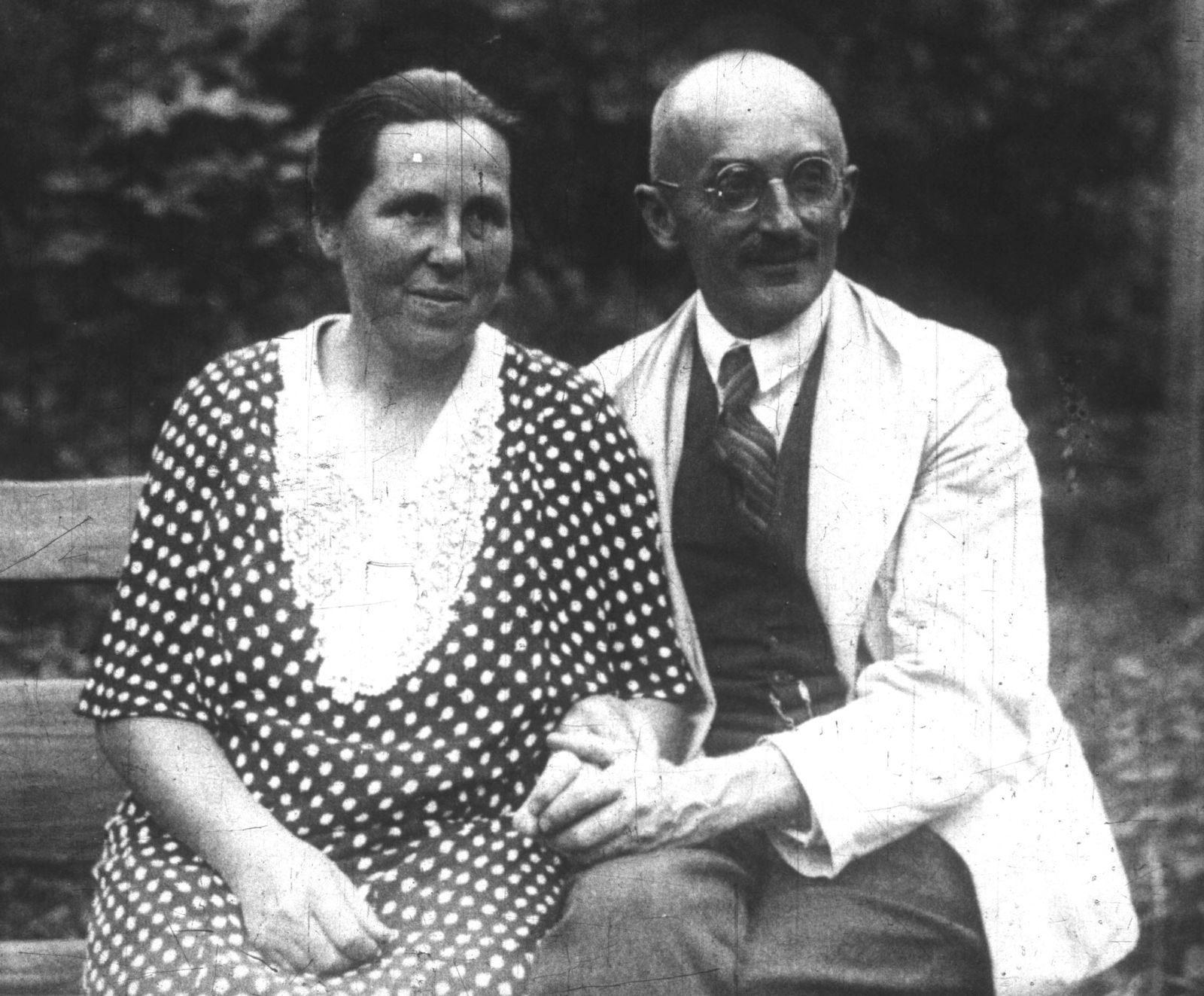
One of the lasting legacies of Erwin’s forty-nine years as editor was his ability to preserve the identity of a successful and trusted edition while remaining willing to revise it when the evidence demanded. This balance between continuity and revision continues to characterize the NTG today. For more than 125 years, successive generations of editors have sought to incorporate the most relevant evidence, reconsider earlier judgments, and make use of new methods and technologies to present the text as accurately and responsibly as possible. Although its long history has given the NTG the authority of a legacy edition, it has never relied on that inheritance alone. Since Erwin’s departure, new manuscripts have been incorporated, earlier decisions revisited, editorial methods refined, and new technologies applied to the analysis and presentation of the evidence. Later editions expressed this commitment explicitly. The NTG27, for example, states that its aim is to provide a “well-founded working text together with the means of verifying it or alternatively of correcting it.”19 Throughout these changes, the NTG has remained recognizably the same edition, retaining the confidence of successive generations of readers. Its ability to change without losing its identity is one of the chief reasons it has remained so widely used and influential in New Testament textual criticism for more than a century.
- For more on Eberhard Nestle and the beginnings of the NTG, see here: https://criticaltexts.com/nestle-aland-the-origin-story/ ↩︎
- William Canton, A History of the British and Foreign Bible Society, vol. 5 (London: John Murray, 1910), 385 n. 2. See also Simon Crisp, “The Correspondence of Erwin Nestle with the BFBS and the ‘Nestle-Kilpatrick’ Greek New Testament Edition of 1958,” in Early Readers, Scholars and Editors of the New Testament (Piscataway, NJ: Gorgias Press, 2014), 189. ↩︎
- Erwin Nestle, “How to Use a Greek New Testament,” BT 2, no. 2 (April 1951): 49–55, at 49. ↩︎
- A.J. Maas, “Editions of the Bible,” in The Catholic Encyclopedia, vol. 5 (New York: Robert Appleton, 1909), 4. ↩︎
- Caspar René Gregory, Textkritik des Neuen Testamentes (Leipzig: J. C. Hinrichs, 1900–1909); Hermann Freiherr von Soden, Die Schriften des Neuen Testaments in ihrer ältesten erreichbaren Textgestalt hergestellt auf Grund ihrer Textgeschichte (Berlin and Göttingen, 1902–1913). ↩︎
- Crisp, “The Correspondence of Erwin Nestle,” 191–92. ↩︎
- Württembergische Landesbibliothek Stuttgart, Nachlass Eberhard Nestle / Teilnachlass Klara Nestle, “Zur biblischen Textkritik. Erinnerungen an Tischgespräche im Hause von Eberhard Nestle,” Mappe 3, Nr. 6, Kalliope DE-611-BF-30084. ↩︎
- Eberhard Nestle, Johannes Dahse, and Erwin Nestle, Das Buch Jeremia: Griechisch und Hebräisch (Stuttgart: Privilegierte Württembergische Bibelanstalt, 1924). ↩︎
- NTG3, viii: “Ut lectionum, ita testium quin plus quam delectum darem, spatii angustia obstabat.” ↩︎
- Kurt Aland and Barbara Aland, The Text of the New Testament: An Introduction to the Critical Editions and to the Theory and Practice of Modern Textual Criticism, 2nd ed., trans. Erroll F. Rhodes (Grand Rapids: Eerdmans; Leiden: Brill, 1989), 20 n. 46. Unfortunately, these printing plates no longer exist, as they were destroyed years ago. ↩︎
- Ernst von Dobschütz, “Die zweite Neutestamentler-Tagung zu Münster i. W.,” ZNW 22 (1923): 309–312, esp. 311. ↩︎
- Ernst von Dobschütz, “Die Neutestamentler-Tagung in Würzburg,” ZNW 22 (1923): 147–150; ibid., “Die zweite Neutestamentler-Tagung zu Münster i. W.,” 309–312; Hans Lietzmann, “Notizen,” ZNW 23 (1924): 154–157. ↩︎
- Aland and Aland, The Text of the New Testament, 21–22. ↩︎
- Eberhard Nestle, “Zum griechischen Neuen Testament,” Protestantische Monatshefte 6 (1902): 273. ↩︎
- Ernst von Dobschütz, “III. Neutestamentlertagung in Magdeburg am 29. Oktober 1924,” ZNW 23 (1924): 311–313, esp. 312–313. ↩︎
- Ernst von Dobschütz, “IV. Neutestamentlertagung zu Erlangen am 29. und 30. September 1925,” ZNW 25 (1926): 168–174, at 170. ↩︎
- Aland and Aland, The Text of the New Testament, 20. ↩︎
- Nestle, “How to Use a Greek New Testament,” 49–55. ↩︎
- NTG27, 46*. ↩︎
Dear Greg, what an impressive achievement by Erwin Nestle throughout half a century and what an impressive illustration of this by you throughout your article, thank you!
Thanks! This was fun to research, and by far the least amount of info available.
Thank you, Grag, for writing this informative and intriguing piece! I learned so much from this about Nestle the younger!
Thank you for reading, An-Ting!